



Cycling: the closest thing we have to universal transport
September 23, 2025
We often hear about cycling in the UK as sport or leisure - weekend club runs, fitness rides, charity challenges, or gentle recreationalspins. These are important, and they make up a big share of cycling culture. But what gets overlooked is the everyday kind of cycling: the shopping trips, the school runs, the ride to work or to the GP.
Depending on how you measure it, this type of utility, or everyday, cycling actually accounts for a third to half of all cycling trips in Britain. Yet this large swathe of cyclists -people using their bikes as transport - are frequently forgotten in policy and media narratives. Nowhere is that neglect more acute than for disabled cyclists, who rely on bikes, trikes and tandems not only for leisure, but as essential mobility aids.
Mobility is about more than simply getting from A to B. It is agency, reliability, and dignity. If a bus is too crowded for your balance or pain levels today, your bike is ready now. If fatigue is unpredictable, you can start gently, pause when you need, and get home without waiting in the rain for a taxi you may not be able to afford. For many, cycling restores spontaneity - choosing when to leave, which route to take, where to stop - things able-bodied riders might barely notice.
And this is true not only for disabled cyclists but for millions of others who ride for utility: the parent carrying children to school, the worker commuting to the office, the older rider using an e-bike to pop to the shops. When infrastructure fails to deliver, it’s this mainstream group who feel it most.
{{cta-ebike}}
The e-assist that changes everything
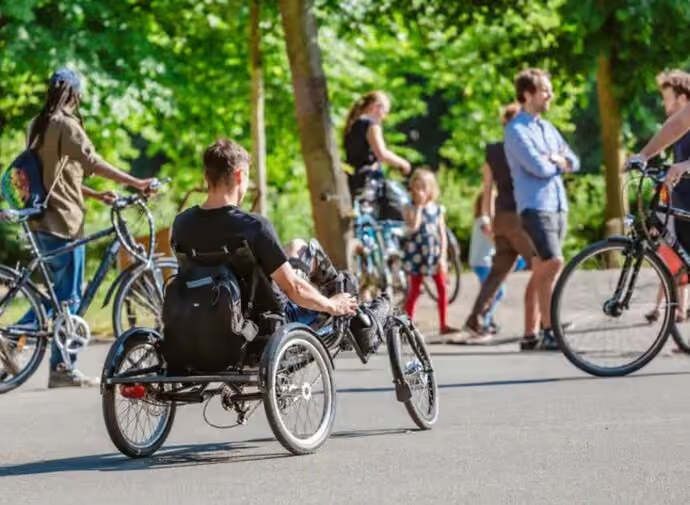
For those whose conditions limit stamina, balance, or strength, technology has opened doors that might once have seemed closed. E-bikes and e-trikes offer steady, low-impact pedalling with an electric boost that reduces joint strain and makes longer journeys achievable. Trikes provide stability for riders with balance issues or partial paralysis, while step-through frames remove the awkwardness of lifting or twisting. Cargo and adaptive platforms can even carry children, shopping, or medical equipment, making them practical everyday vehicles.
Crucially, these innovations don’t just serve disabled riders. They expand the possibilities for anyone who relies on their cycle for daily life — parents on the school run, older adults doing the weekly shop, commuters with longer journeys. In this way, the line between “disabled cyclist” and “utility cyclist” begins to blur. Both groups are underserved, both are overlooked, and both need supportive policy that treats cycles as essential mobility tools rather than leisure toys.
James Walker, CEO and Founder of Jorvik Tricycles, said: “Championing the benefits and need for cycling to be accessible for all is key to help create an infrastructure that promotes equality and inclusivity. From greater investment in public bridleways and an expanded ‘Cycle to Work’ scheme, to policy changes that allow adaptive bikes on public transport, ensuring people of all abilities can enjoy cycling is vital to making it a truly universal transport option.
“At Jorvik Tricycles, our mission has always been to provide supportive, stable products that meet this gap in the market and highlight the importance of making cycling accessible for all.”
Just as e-bikes and trikes can transform mobility for those with balance or stamina challenges, tandems open up cycling for people with sight loss. Riding as the "stoker" – the rider at the back – means a blind or partially sighted person can share the rhythm, effort and the sheer joy of movement alongside a sighted pilot. Many develop their own routines with partners, relatives or close friends: using verbal cues for starts and stops and signalling surface changes.
Beyond the practical, tandems offer something more intangible but just as important - the companionship, confidence and exhilaration that come with moving through the world on two wheels. Again, this is not leisure cycling in the narrow sense. For many, it’s about access: to the park, the shops, or simply the feeling of moving under your own power. It’s a reminder that cycling’s benefits are both visceral and practical, and that these should be available to all.
Despite all this, streets and systems too often treat cycling as a niche sport for fast two-wheelers. The result is everyday exclusion.
Confidence, backup and the role of insurance
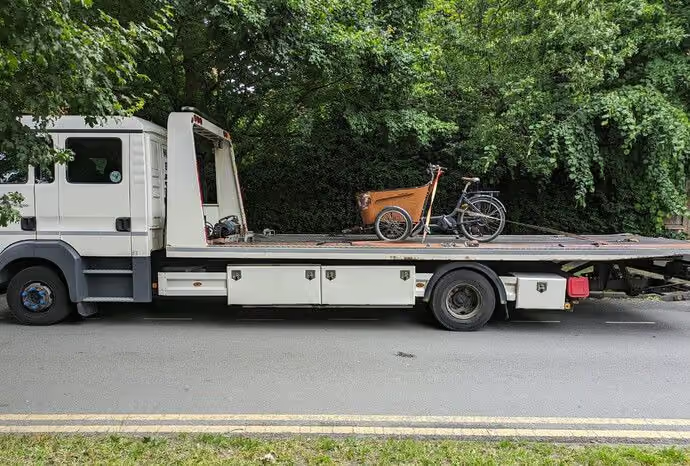
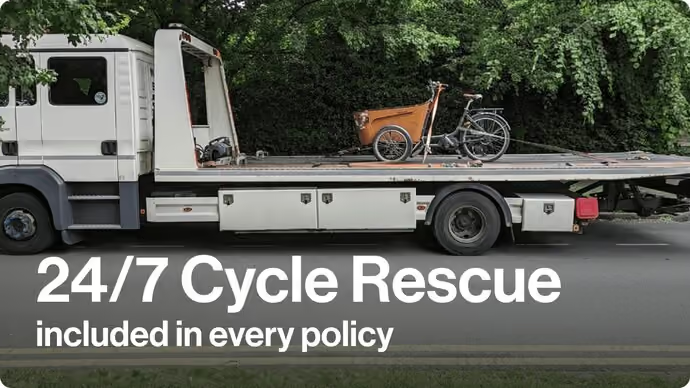
Independence also means knowing there's a safety net. Over the last three decades, the ETA has campaigned for inclusive, sustainable transport - Green Transport Week, Car Free Day - and built practical support around it. Cycle insurance that covers adapted cycles, with low excesses and genuine new-for-old replacement, and 24/7 Cycle Rescue — a true breakdown recovery service for cyclists. It is particularly valued by riders who cannot easily lift a bike onto a kerb, fix a chain at the roadside, or walk the last milehome. For the silent majority of everyday riders - not just those with disabilities but anyone depending on a cycle for real-life transport. For many, that kind of support is vital.
Reframing cycling as mobility does not diminish its sporting side. Streets that work for a trike also work for a parent with a trailer, a delivery rider, a nervous beginner. Policies that see a cycle as an access tool unlock parks and pedestrian zones for more people, not fewer. And a narrative that places disabled cyclists at the heart of planning decisions, reminds all of us what riding gives: agency,community, moving under your own power.
Cycle Rescue is free with ETA bicycle insurance
Cycle insurance from the ETA is well suited to adapted cycles, e-bikes and electric trikes. If you suffer a breakdown (including punctures, or even a flat e-bike battery) while out cycling, our 24-hour Cycle Rescue team can arrange transport for you and your bicycle to a safe location. Buy as a standalone service, or get it included for free with ETA cycle insurance, along with:
• Theft, accidental damage & vandalism
• E-bike battery theft cover
• Cycle Rescue
• No devaluation of your bike over time
• £2m third party PLUS £20,000 personal accident cover
• Shed and garage storage
• Low standard excess of 5% (£50 minimum)
{{cta-ebike}}
Please note: We can't guarantee our Cycle Rescue drivers will be able to help you from your cycle to the recovery vehicle if your mobility is severely restricted. If you have any questions, please get in touch.
Adapated cycles knowledge bank
Here’s a list of useful UK-based organisations that support disabled people, or those with mobility or sensory impairments, who want to cycle more. These groups cover advocacy, inclusive cycling sessions, adapted cycle hire, and policy influence.
Wheels for Wellbeing – London-based charity championing disabled cycling. They run inclusive cycling sessions, campaign for betterinfrastructure, and publish influential research such as their Inclusive Cycling Guide. wheelsforwellbeing.org.uk
Cycling Projects / Wheels for All – National charity promoting cycling for all abilities. Their Wheels for All programme offers inclusive cycling sessions with a wide range of adapted cycles at centres across England. cycling.org.uk
Sustrans – National sustainable transport charity. Whilebest known for the National Cycle Network, they also work on inclusive cyclingprojects and provide resources for disabled riders. sustrans.org.uk
Cycling UK – Offers advice on adapted cycles, campaigns forinclusive cycling, and provides resources and community connections for riderswith disabilities. cyclinguk.org
Get Cycling CIC – Community interest company thatspecialises in supplying adapted bikes, tandems, cargo bikes, and trikes fordisabled riders and families. getcycling.org.uk
Jorvik Tricycles - The UK's leading adult tricycle providers. jorviktricycles.com
Local inclusive cycling hubs – Many cities have them (e.g.Pedal Power in Cardiff, Evolve in Glasgow, Open Country in Yorkshire). These are often community-run charities providing adapted cycle hire and supported rides.
The ethical choice
{{cta-cycling}}
The ETA was established in 1990 as an ethical provider of green, reliable travel services. Over 30 years on, we continue to offer cycle insurance , breakdown cover and mobility scooter insurance while putting concern for the environment at the heart of all we do.
The Good Shopping Guide judges us to be the UK’s most ethical provider.
Information correct at time of publication.
Leave us a comment
