



Dutch e-bike bans and the rise of the “e-moto”
January 26, 2026

Dutch authorities are cracking down on fatbikes as illegally modified electric bikes become more common. But focusing on one design misses the bigger issue: when “e-bike” is used as a catch-all for machines that aren’t bicycles at all.
Few would argue with the Netherlands’ reputation as the cycling capital of the world. The infrastructure is joined-up and the bike is still treated as everyday transport rather than a hobby. In Amsterdam alone, around a third of journeys are made by bike. But even in the land of the fiets, the boom in electric bikes is starting to rub up against the limits of what the system was designed for.
Almost half of all bicycles sold in the Netherlands in 2024 were electric. E-bikes allow more people to cycle further, and more older riders to stay mobile. But there has been a less welcome side-effect – growing numbers of illegally modified machines travelling faster than the law allows.
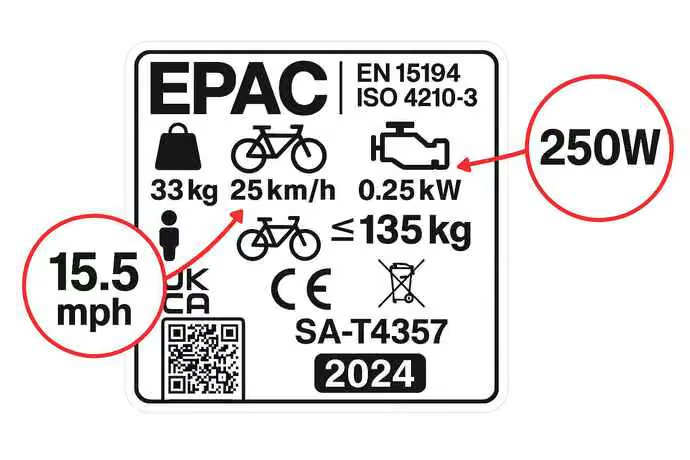
Across Europe, the rules are clear on paper. A standard, road-legal e-bike is limited to a 250W motor that cuts out at 15.5mph (25km/h). It should only help you while you’re pedalling. In law, these are treated as bicycles.
The problem is what happens when something looks like an e-bike but rides like a moped or motorbike.
Dutch authorities have focused on one particular style: the fatbike. With its chunky tyres and distinctive styling, it has become popular with teenagers. But the ease with which these bikes can be modified to go faster is creating serious problems. The safety organisation VeiligheidNL estimates around 5,000 fatbike riders end up in A&E each year – many of them aged 12–15. These crash statistics, alongside reports of antisocial riding, are prompting local bans across the country.
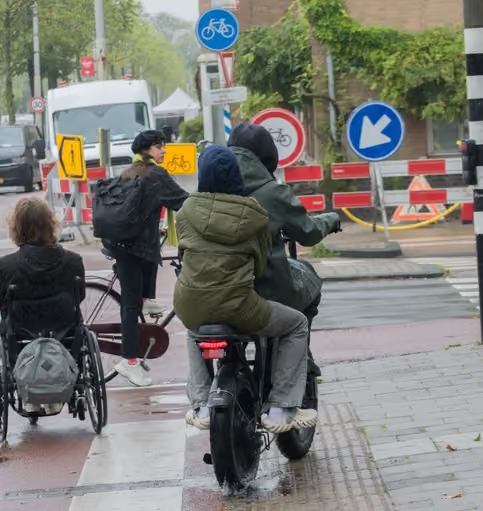
This isn’t a uniquely Dutch problem. In the UK, fat-tyred e-bikes have become a popular choice for delivery riders. And yes, plenty of those bikes are illegal: some are sold with motors above the 250W limit; others have been adapted to keep assisting beyond 15.5mph. But it would be a mistake to treat this as a problem solvable by targeting one particular design. Illegal e-bikes don’t always announce themselves with wide tyres and a particular frame shape.
{{cta-ebike}}
We also know, as cycle insurance providers, that not everyone riding an illegal e-bike has set out to break the law. A lot of people buy in good faith, assuming that if it’s on sale in the UK it must meet UK rules. Only later do they realise they’ve been sold something that sits outside the legal definition of an e-bike.
There are legal definitions for electric bicycles and electric motorbikes (and everything in between), but to the layperson those boundaries can blur. The catch-all term “e-bike” may have become too broad for its own good. If a police force posts about seizing “e-bikes”, the image shared might be an electric motorbike that doesn’t even have pedals.
When that happens, legal e-bikes get lumped in with vehicles that aren’t bicycles at all.
In North America, some campaigners and industry groups have started to tackle this problem by introducing the term “e-moto” – for electric, motorcycle-like machines that resemble bicycles but don’t meet e-bike rules.
The term e-moto could help in the UK, too. The Bicycle Association has repeatedly asked reporters to stop mislabelling electric motorbikes as e-bikes, but it’s a challenge given all the caveats about wattage, pedals and cut-off speeds.
The real problem isn’t tyre width. It’s a language gap. Clearer terminology might prove more effective than banning a particular style, as the Netherlands is now doing with fatbikes.
Cycle Rescue for e-bikes
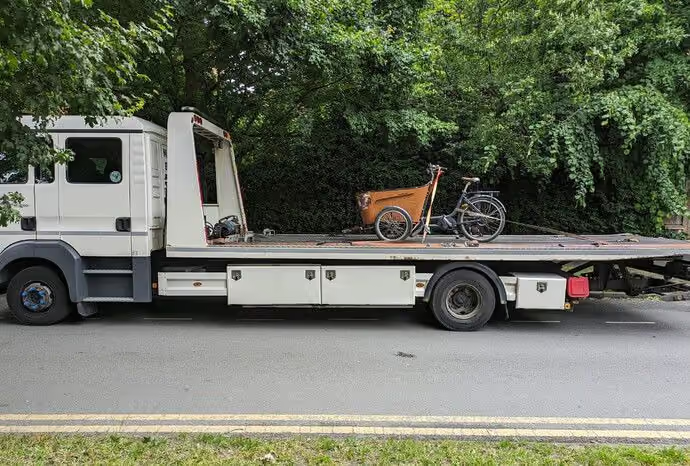
If you suffer a breakdown (including punctures, or even a flat e-bike battery) while out cycling, our 24/7 Cycle Rescue team can arrange transport for you and your bicycle to a safe location. Buy as a standalone service, or get it with ETA cycle insurance
{{cta-ebike}}
The ethical choice
The ETA was established in 1990 as an ethical provider of green, reliable travel services. Over 35 years on, we continue to offer cycle insurance , breakdown cover and mobility scooter insurance while putting concern for the environment at the heart of all we do.
The Good Shopping Guide judges us to be the UK's most ethical provider.
Information correct at time of publication.
Leave us a comment
