





Bicycle puncture prevention guide
January 20, 2026
Bicycle punctures are like buses. You can ride for ages without one, and then two turn up. But do flat tyres really need to be a fact of life on two wheels? Punctures aren’t just bad luck. A lot of them can be avoided with tougher tyres and a dash of sealant.
Solid tyres that never puncture
The closest thing to a guaranteed flat-free ride is a tyre that can’t be punctured. Tannus tyres are made from closed-cell foam (similar to the stuff they use to make yoga mats). They won’t puncture, and they don’t deflate – they simply wear down over time, which the manufacturer says can take up to 5,000 miles.
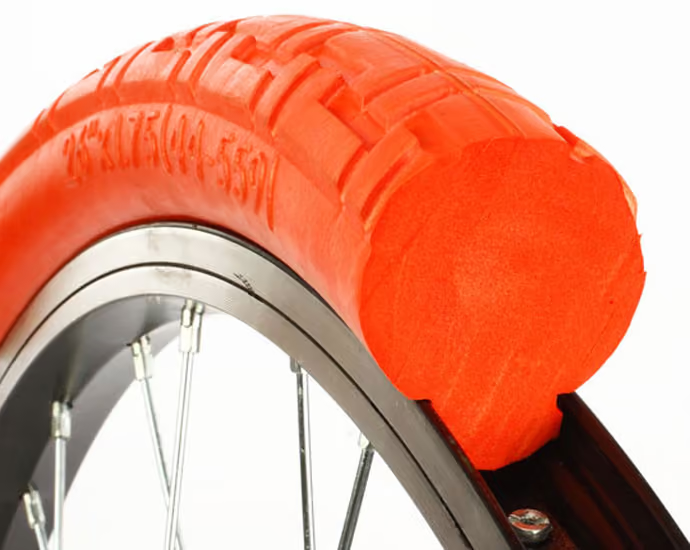
If you are wondering why every bike isn’t fitted with airless tyres, they are tricky to install (you can pay a bike shop to fit them), and some riders criticise the ride quality.
Pneumatic tyres continue to dominate for a reason: the air inside the tyre does an excellent job of cushioning rough surfaces. Airless tyres can feel more harsh, but if you want puncture-proof certainty above everything else, they make sense.
Tyre liners: a halfway house
An alternative to solid tyres is the armoured insert: a removable foam liner that sits between tyre and tube. These are designed to stop sharp objects getting through the tread and into the tube.
They add weight, and if the liner shifts or bunches it can be problematic, but it’s claimed they can prevent 90% of punctures caused by sharp debris.
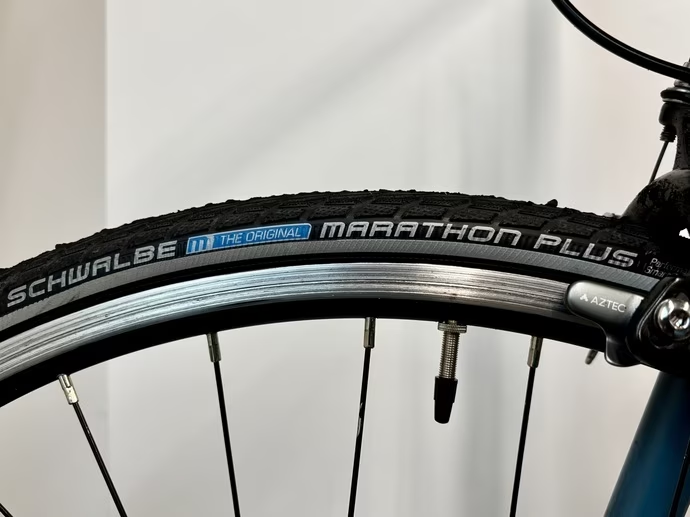
A simpler option is the Marathon Plus tyre, which has a built-in plastic liner that while a little tougher to fit than a conventional tyre offers impressive puncture resistance.
Know your punctures
Most punctures are one of the usual suspects. Knowing which type you’ve suffered makes the fix quicker.
The common or garden puncture
These are caused by shards of glass, flint, thorns, staples…the list goes on. If you’re lucky, you’ll spot the culprit quickly, but it can stay embedded in the tyre and hidden from view, which is why punctures sometimes arrive in pairs: you fix the tube, but the same sharp object sticks around to strike again.
Pinch punctures
Hit a pothole or kerb with an underinflated tyre and the inner tube can get trapped between the rim and the road. When you inspect the inner tube, you’ll usually see two small holes close together (it’s why they’re sometimes called “snakebite punctures”).
Rim tape and spoke problems
Rim tape sits between the wheel and the inner tube to protect against a slightly protruding spoke. If the tape is worn or has shifted, these punctures can seem mysterious because there’s no obvious damage to the tyre.
How to fix a puncture
https://www.youtube.com/watch?v=dRqbDamDLT0
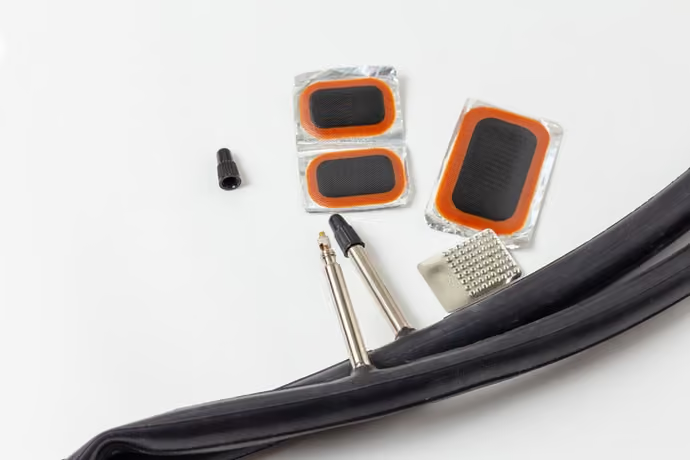
The basic ritual hasn’t changed much in 100 years. Remove the wheel. Unseat one side of the tyre. Pull out the tube, but leave the valve fixed in the rim for the time being. Put a bit of air in the tube and listen carefully for a hiss.
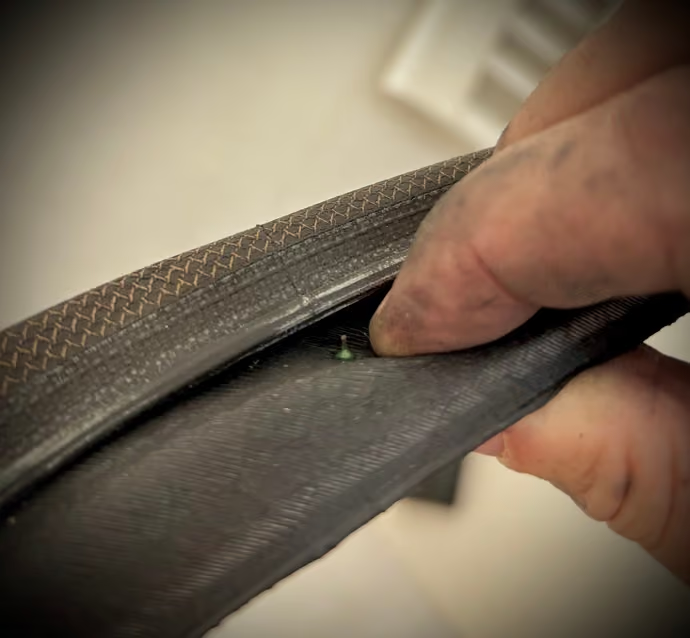
Once you locate the hole, its position on the tube can help you work out where to look for something embedded in the tyre. Run your fingers carefully around the inside of the tyre to feel for anything sharp. Bare fingertips work best but go slowly. Turning to the outside of the tyre, flex the rubber a little as this can help reveal a hidden shard of glass or flint that’s hidden from view.
Ready to go tubeless?
Many mid-range and high-end bikes come fitted with tubeless tyres, or at least wheels that are tubeless-compatible. As the name suggests, these do away with the inner tube. The inside of the tyre is treated with a sealant that plugs small holes as soon as they appear. And with no tube, pinch flats become a thing of the past (although you can still damage a rim, or “burp” air if you hit something hard).
If the puncture is too serious to be dealt with by the sealant inside the tyre, you can use a plug kit (which is quicker and easier than a traditional inner tube roadside repair) or fit an inner tube to get you home.
Self-sealing inner tubes
In years gone by, a roadside puncture meant tyre levers, glue, and patience. These days, fewer people bother, preferring to change the tube at the roadside.
Self-sealing inner tubes aim to do away with the roadside repair ritual entirely. They come pre-filled with sealant (or you can add it yourself to a regular inner tube), which instantly plugs small punctures.
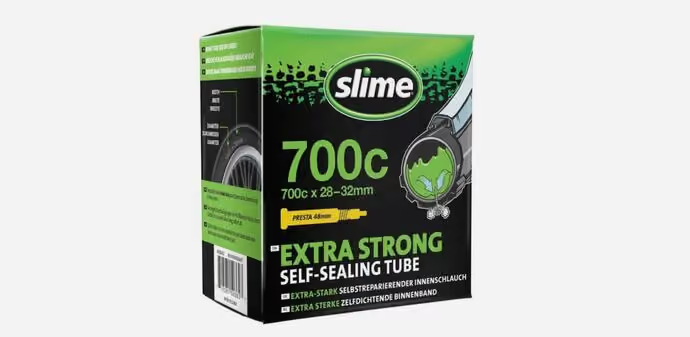
For commuters and e-bike users in particular, they can be worth considering but they add weight and are not designed to offer the same level of performance as tubeless tyres. Be warned: if one bursts, replacement can be a messy job.
NB: If you are running self-sealing inner tubes and your tyre goes flat, don't assume the worst. Re-inflating the tyre can give the sealant another chance to work and you may be able to continue on your way.
Puncture-resistant tyres
Manufacturers sometimes save money by fitting cheaper tyres, so the first upgrade for any such new bike should be better rubber. Sporting cyclists will be concerned with weight and performance above all else, but prioritizing puncture resistance buys peace of mind.
Schwalbe Marathon Plus tyres offer some of the best puncture resistance for everyday riding because they have a layer of extra material to stop sharp objects reaching the tube. They can take a bit of effort to fit, but applying tyre lubricant (or washing up liquid) to the rim and bead makes the job easier. Well, that's the theory.
I fitted Marathon Plus tyres...
After 1,500 miles of an urban commute that’s brutally hard on tyres, it wasn’t a classic puncture that finally got the better of my self-sealing inner tube. I was clumsy topping up the pressure and snapped the valve nut clean off. The Gatorskin it was paired with was already scarred with flint and glass cuts, so I decided it was time to try my first Marathon Plus.
It turns out everything you’ve heard about Marathon Plus tyres being a pain to fit is true. I managed to burst two inner tubes before admitting defeat and taking it to my local bike shop. The mechanic made it look absurdly easy – and didn’t even reach for tyre levers.
Continental’s Gatorskin is another popular choice, particularly among road riders who want puncture resistance without entering heavy-duty commuter tyre territory. Variants like the Gator Hardshell increase protection further with reinforced layers, including in the sidewalls.
Sometimes there's nothing you can do
This week has been something of a personal record: four punctures in as many days. One was a valve nut that sheared off while I was topping up the pressure so maybe that shouldn't count, but it still leaves two Gatorskins and one Marathon Plus tyres defeated. It pays to be prepared, but sometimes you just get a run of bad luck.

Cycle Rescue
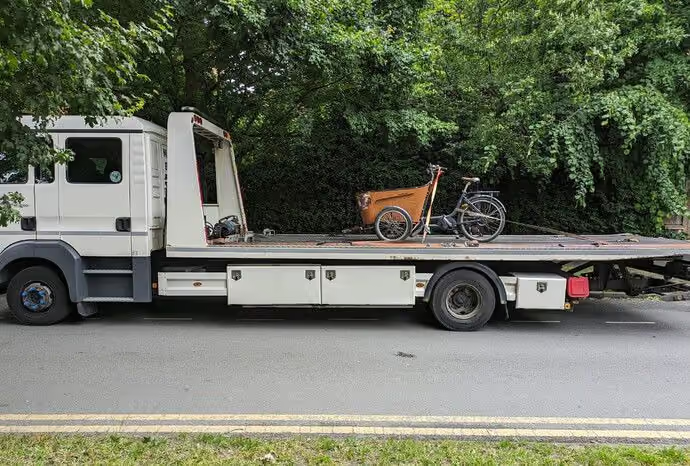
ETA Cycle Rescue is a breakdown recovery service that operates 24/7 across the UK and covers punctures as well as mechanical mishaps, or even a flat e-bike battery. The service costs £24 per year.
FAQs
What causes most bicycle punctures?
Usually something sharp like glass shards, flint, thorns or metal working its way through the tread. The object can stay hidden in the tyre, which is why punctures sometimes happen twice in quick succession.
Why do I keep getting punctures?
Most repeat punctures come from a shard still embedded in the tyre, a tyre that’s worn thin, or rim tape that’s slipped.
What is a “snakebite” puncture?
A pinch puncture caused by hitting a pothole or kerb with tyres that don't have enough air in them. The tube usually shows two small holes close together.
Do puncture-resistant tyres actually work?
Yes. Upgrading to tougher tyres is one of the simplest ways to reduce punctures. Schwalbe Marathon Plus is a standout for everyday reliability, while Continental Gatorskin is a popular “tough but not tank-like” road option.
Is tubeless better for avoiding punctures?
Yes, although both your wheels and tyres must be tubeless compatible . Tubeless tyres use sealant to plug small holes automatically. Big cuts can still defeat the sealant, but plug kits make many repairs quicker than patching a tube.
Do self-sealing inner tubes work?
Opinion is divided. They’re no substitute for puncture-resistant tyres and replacement can be a messy job.
Should I patch a tube or replace it?
At the roadside, swapping tubes is quickest. But take the punctured tube home and patch it to save money and avoid unnecessary waste.
What should I check if I can’t find the puncture cause?
Run your fingers carefully around the inside of the tyre, flex the tread to reveal hidden glass, and inspect the rim tape for wear or movement.
What if I get a puncture and can’t fix it?
ETA Cycle Rescue offers 24/7 UK breakdown recovery for punctures and other bike problems, including flat e-bike batteries, from £24 per year.
Information correct at time of publication.
Leave us a comment
