



E-bikes vs EVs: are we backing the wrong horse?
October 7, 2025
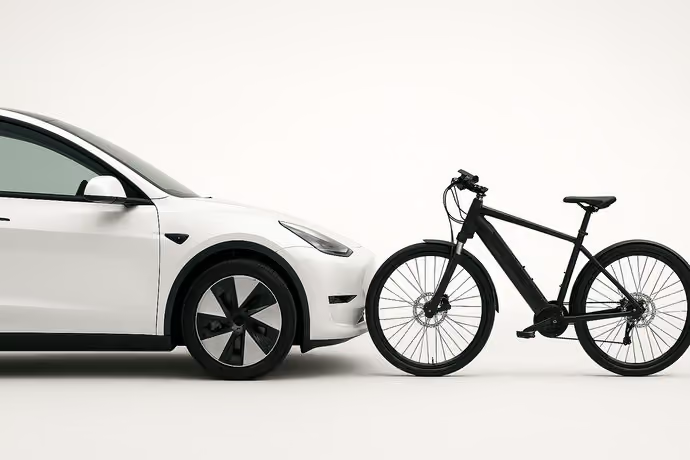
Over the past decade, electric bikes have shifted from a niche product to a growing part of the UK cycle market. Sales peaked at around 165,000 units in 2022, and today e-bikes account for nearly a third of the industry’s value. They’ve done this without a penny of subsidy. No purchase grants. No battery incentives.
By contrast, billions of pounds have been directed towards electric cars. The government’s Plug-in Car Grant alone cost more than £1.4 billion before it was phased out in 2022, and public money continues to fund charging infrastructure and generous tax breaks. Yet the mode of transport that delivers the greatest public benefit per pound - cycling - has been left to grow with little support.
Sales of electric bikes rose rapidly, reaching around 165,000 units in 2022 and generating retail revenue of more than £300 million. Across the wider cycling market, e-bikes now make up nearly a third of sales value. This growth reflects genuine demand - from commuters, families using cargo bikes, older riders, and those who might otherwise have given up cycling. But while the market has grown naturally, safe cycling routes have not kept pace.
.avif)
In 2020 the government launched its cycling strategy, Gear Change, and promised £2 billion for walking and cycling. It also set up a new body, Active Travel England, to check the quality of projects. In London, the cycle network expanded from about 90km to over 400km by 2024, and cycle trips in the city are now 26% higher than before the pandemic. Across the rest of the country, however, progress has been patchy and often delayed. In 2023, central cuts reduced some of the money available, and campaigners point out that only a fraction of promised schemes has actually been built.
Here is the key point: cycling infrastructure gives one of the best returns on public money of any transport investment. Studies show that for every £1 spent on good walking and cycling schemes, society gets back between £5 and £13 in benefits. These come from improved health, fewer sick days, less congestion, cleaner air and stronger local economies. Even the Department for Transport’s own assessments class cycling projects as offering “very high” value for money. By comparison, road building schemes are often rated at less than half that return.
{{cta-ebike}}
The benefits of cycling arrive quickly and are widely shared. By contrast, infrastructure for electric cars is expensive to install, requires costly upgrades to the electricity grid, and the benefits take years to materialise.
Of course, electric cars are needed to cut emissions from long journeys and freight. But it does not follow that such a amount of public money should go towards private cars. In towns and cities, investment in cycling delivers far more bang for buck.
The situation is back to front. Electric cars - expensive, heavy vehicles that still cause congestion and require major infrastructure — have received billions in grants, tax breaks and public charging investment. Electric bikes, which cost far less, take up little space, cut traffic, improve public health and deliver far higher returns on investment, receive nothing at all.
People replacing short car journeys with a £1,500 e-bike get no support and often no safe space to ride, while owners of £50,000 electric cars have benefited from public money at every stage. If you were designing transport policy around efficiency, health and value for money, you wouldn’t build it this way. Yet this is exactly how it’s been done.
If Britain wants the best return on its transport spending, it should rebalance its priorities. Cycleways, safer junctions, and even modest incentives for e-bikes would do far more to deliver healthier, more liveable communities than ever greater subsidies for private cars. The evidence is clear: the smartest investment isn’t four wheels and a plug, it’s two wheels and a set of pedals.
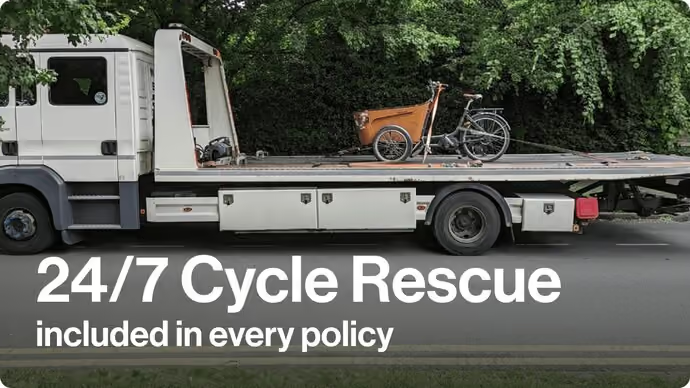
Cycle Rescue is free with ETA bicycle insurance
If you suffer a breakdown (including punctures, or even a flat e-bike battery) while out cycling, our 24-hour Cycle Rescue team can arrange transport for you and your bicycle to a safe location. Buy as a standalone service, or get it included for free with ETA cycle insurance, along with:
• Theft, accidental damage & vandalism
• E-bike battery theft cover
• Cycle Rescue
• No devaluation of your bike over time
• £2m third party PLUS £20,000 personal accident cover
• Shed and garage storage
• Low standard excess of 5% (£50 minimum)
{{cta-ebike}}
The ethical choice
The ETA was established in 1990 as an ethical provider of green, reliable travel services. Over 35 years on, we continue to offer cycle insurance , breakdown cover and mobility scooter insurance while putting concern for the environment at the heart of all we do.
The Good Shopping Guide judges us to be the UK's most ethical provider.
Information correct at time of publication.
Leave us a comment
