





E-bikes vs e-motos: Why clear language matters for UK roads
September 18, 2025
If you follow UK coverage of electric two-wheelers, you might have noticed a recurring muddle that see news stories routinely describe off-road electric motorbikes like Sur-Ron as “e-bikes”, even when the machines in question have throttles, no functional pedals, and motorcycle-level performance. It's more than semantics. Blurring categories creates confusion and makes enforcement harder. The legal e-bike that potters about at 15mph is not the same thing as a 50mph+ electric dirt bike ridden without registration or insurance.
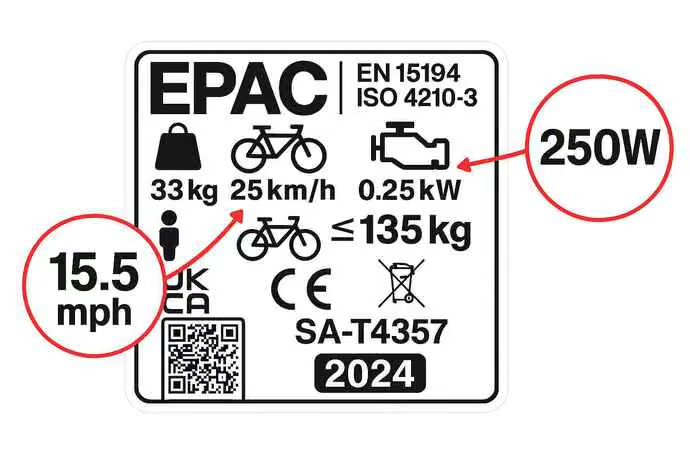
Across Europe, we already have clear categories in law. The everyday e-bike most people use is, legally speaking, an EAPC: an electrically assisted pedal cycle with a 250W motor that stops providing assistance at 15.5mph (25 km/h), and that only assists while you are pedalling. These vehicles are considered bicycles.
Anything that goes faster, has more power, or moves without pedalling falls into Europe’s L-category vehicle framework – powered cycles, mopeds, and motorcycles – under Regulation (EU) 168/2013. Speed pedelecs, for example, are L1e-B mopeds and require type approval, registration, insurance and, typically, a motorcycle-style helmet.
So why the mess in public debate and across the media? Because the catch-all term "e-bike” is descriptive in everyday language, but imprecise for safety messaging and enforcement. That is where the emerging term “e-moto” may help.
In North America, advocacy groups have begun using e-moto as a plain-English label for electric, motorcycle-like machines that look like bicycles but are not legal e-bikes. PeopleForBikes – the US industry coalition behind America's three-class e-bike model – explicitly pushed the e-moto term, and states are starting to codify it. For example, California defines and regulates e-motos as off-highway electric motorcycles.
At city and state level, public-facing organisations are also adopting the language. In Illinois, the Active Transportation Alliance and Ride Illinois have produced guidance that distinguishes between legal e-bikes and e-motos, warning that the latter are often mis-sold and do not belong on bike trails.
The goal is simple; protect access for legitimate e-bikes, while giving police, retailers and journalists a clear, non-technical word for high-powered electric motorbikes that do not meet e-bike rules.
{{cta-ebike}}
Europe already has precise legal labels such as EAPC, L1e-A powered cycles, L1e-B mopeds, and L3e motorcycles, but they are jargon to most people. These standards are fit for purpose in law and engineering, but they are hardly consumer friendly.
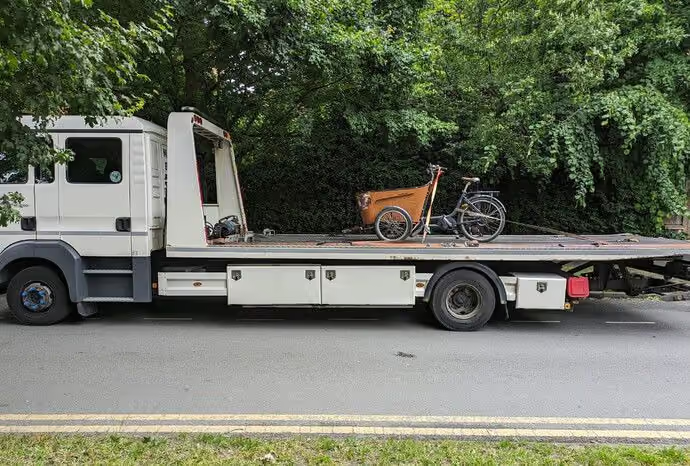
Meanwhile, UK media and even some police comms still use the term “e-bike” as a catch-all, particularly when reporting seizures or collisions involving electric motorbikes. The Bicycle Association, which represents the UK cycle industry, has repeatedly asked reporters to stop mislabelling electric motorbikes as e-bikes, precisely because it distorts risk and policy.
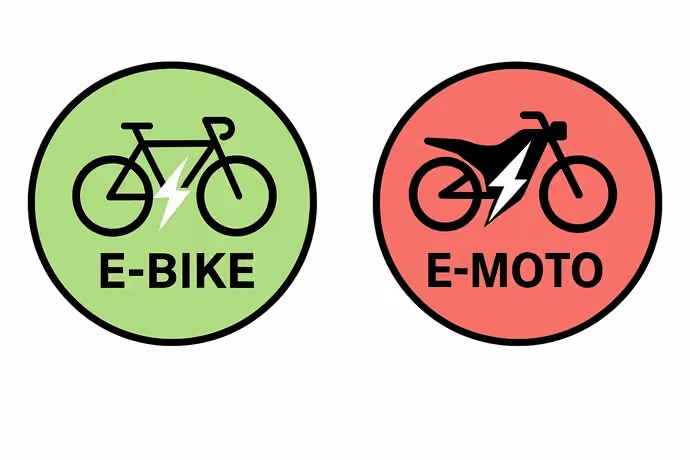
Given the ongoing confusion, adopting a simple public-facing term like e-moto for all electric two-wheelers that are not EAPCs could help with enforcement. The message that “illegal e-motos will be seized” is cleaner than lengthy caveats about wattage, pedals and cut-off speeds, and clearer public understanding. Separate accreditation marks for e-bikes and e-motos would make it easier to make the distinction than products sold as an “e-bike” with a buried footnote.
A clearer label (both in terms of terminology and perhaps an accreditation mark) would also help retailers avoid mis-selling.

The term e-moto is no silver bullet, but it is an intuitive label for electric motorbikes that are not bicycles. As a cycle insurance providers, we often hear from people who have inadvertently bought an over-powered e-bike. In the UK and across Europe, adopting e-moto in media, retail and enforcement communications could reduce confusion, protect thereputation of e-bikes, and give the public a plain-English signpost.
{{cta-ebike}}
The ethical choice
The ETA was established in 1990 as an ethical provider of green, reliable travel services. Over 35 years on, we continue to offer cycle insurance , breakdown cover and mobility scooter insurance while putting concern for the environment at the heart of all we do.
The Good Shopping Guide judges us to be the UK's most ethical provider.
Information correct at time of publication.
Leave us a comment
