



UK e-bike laws and buying guide
December 2, 2025
Electric bikes have gone from niche to normal in little more than a decade, but with the rapid growth has come confusion about the rules and regulations. Which e-bikes are legal? Is a throttle allowed? Does cycle insurance cover children carried by cargo bike? And what if you’ve unknowingly bought something too powerful?
At ETA we’ve spent more than 30 years standing up for cyclists. We were the first to offer specialist cycle insurance in the UK, we created the country’s only 24/7 breakdown recovery service for bikes, and we’ve been named Britain’s most ethical provider for over a decade. All of which makes us well placed to untangle the questions that come with owning an e-bike.
How can I tell if an e-bike is legal?
The key rule in Britain is that an e-bike must qualify as what the law calls an Electrically Assisted Pedal Cycle (EAPC). That’s just the official term for a bicycle with a small motor to help out. To be legal on the road, and to avoid it being seized by police and you facing possible further penalties, it must:
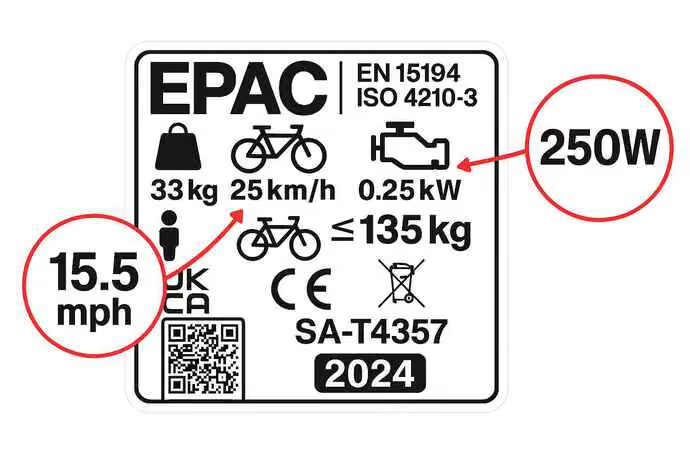
Have a motor no bigger than 250 watts. You don’t need to know what a watt is to check. Look for a sticker or plate on the motor or frame – it should list the power rating. If it says 250W, you’re fine. If it says 500W or 750W, the bike is legally classed as a moped.
Stop giving you a boost once you reach 15.5mph (25 km/h). That doesn’t mean you can’t go faster – it just means the motor will cut out at that speed.
Provide assistance only while you’re pedalling. The motor should be a helper, not a replacement.
If your bike meets those conditions, it’s legally an e-bike. You can use it anywhere you’d ride a conventional bicycle.
What’s the difference between an e-bike, electric moped and electric motorcycle?
This is where a lot of people get caught out.
An e-bike is a cycle with a 250w motor that helps while you pedal.
An electric moped usually has a bigger motor that works without the need for you pedal. The law treats it like any moped: you need a licence, insurance, a number plate and a crash helmet. The exception is something called a "low-powered moped" - see our section on throttles for more details.
An electric motorcycle is faster and more powerful still, and has to follow all the rules that apply to motorbikes.
Read more about whether UK law says you are riding an e-bike, low-powered moped, moped or motorbike.
Do I need a licence or insurance for an e-bike?
If your machine meets the EAPC rules, the answer is simple: no. You don’t need a driving licence, and you’re under no legal obligation to insure it. But with the average e-bike costing £2,000 or more, they’re a prime target for thieves, batteries cost hundreds to replace, and a breakdown can leave you stranded. That’s why ETA offers insurance for e-bikes and the choice of new-for-old replacement, cover for theft and accidental damage, and Cycle Rescue.
{{cta-ebike}}
Can children ride an e-bike?
UK law says you must be 14 or over to ride an e-bike. The rule dates back to the 1980s, when e-bikes were first written into UK legislation. At the time they were seen as closer to mopeds than bicycles, so lawmakers set a minimum age to reassure themselves and the public that children wouldn’t be riding motorised machines.
Elsewhere in Europe, no such restriction was imposed. In the Netherlands and Germany, for example, there’s no legal minimum age for a standard e-bike – parents decide when a child is ready, just as they do with a regular bike. Switzerland is one of the few other countries to mirror Britain’s approach, setting the limit at 14.
Read more about UK e-bike laws.
My e-bike has a throttle – is it legal?
Throttles cause the most head-scratching. If your e-bike was sold before 2016, it may have a full-speed throttle – twist the grip and off you go, without pedalling. Those remain legal.
Since then, the only throttles allowed without extra approval are slow “walk-assist” modes, which push the bike along at walking pace – handy for moving a heavy e-bike when you’re not riding it.
If your throttle propels the bike at speed without pedalling, then in the eyes of the law it’s no longer a bicycle. It becomes a moped, with all the red tape that brings: licence, registration, insurance, number plate, helmet.
There is one exception. Some modern e-bikes with full throttles can be legal if they go through an official approval process. The Driver and Vehicle Standards Agency (DVSA) can test and certify them as low-powered mopeds, which allows them to be treated as normal e-bikes.
To qualify, the bike must have working pedals, have a motor no bigger than 250 watts, cut assistance at 15.5mph (25 km/h), and be fitted with front and rear lights controlled by a single switch.
If the bike passes testing at a DVSA centre, it receives a British National Vehicle Approval certificate linked to its frame number. Once certified, it can be ridden legally on roads and cycle paths at speeds up to 15.5mph using the throttle – without registration, insurance or a licence. In effect, it’s an e-bike with the added convenience of a throttle.
A handful of manufacturers, including Wisper, will handle the paperwork and testing on behalf of their customers. That means you can buy a new e-bike with a full throttle that arrives already certified and ready to ride legally in the UK.
How fast can I go on an e-bike?
This is often misunderstood. The motor will stop helping you once you hit 15.5mph. That doesn’t mean there’s a speed limit on the bike – you can go faster if you’re pedalling hard, heading downhill, or have a tailwind. The law simply ensures that the motor won’t push you beyond 15.5mph on its own.
What if I’ve bought an e-bike with a motor bigger than 250W?
It’s a common pitfall, especially with cheap imports bought online. A 500W or 750W motor might sound tempting (more grunt for the same money), but the moment you ride it on the road, the law sees it as a moped.
You have the option of putting it through the Driver and Vehicle Standards Agency (DVSA) approval process so it can be legally registered, plated and insured like a moped. Ignore the rules and you risk a fine, penalty points, and having the bike confiscated.
Read more about whether you need to register your e-bike.
Is a 250W motor powerful enough to get me up hills?
Yes. A 250-watt motor is the legal standard in the UK and across most of Europe. But here’s the bit many people miss: the 250W figure is about continuous power – what the motor can put out steadily all day. In practice, most motors can deliver much more in short bursts.
That means when you hit a hill, pull away with shopping on the back, or face a strong headwind, the motor can give you an extra shove beyond 250W for a few seconds. The battery plays a big part, too. A larger battery doesn’t just take you further – a small, tired battery might leave the motor feeling flat on climbs, while a good-sized one keeps the assistance smooth and strong.

How far can I travel on an e-bike?
Most modern e-bikes will cover 25–60 miles on a single charge; the biggest factor is the size of the battery.
Battery capacity is usually measured in watt-hours (Wh). Think of it as the size of the fuel tank. A small 300Wh battery might give you 20-30 miles, while a bigger 500Wh or 700Wh pack can stretch to 50 miles or more. That’s why two bikes with the same 250W motor can have very different ranges: one simply has a larger reserve of battery power to draw from.

Other factors matter too: your weight, the terrain, how much assistance you use, and even the weather. Carrying shopping, tackling hills, or riding into a headwind can all reduce the range. Manufacturers usually quote best-case scenarios, with a light rider on flat ground using the lowest power setting. In the real world, expect less than the headline numbers.
Read more about how far your can travel on an e-bike.
Do I have to pedal all the time?
If you want assistance from the motor then, yes. If your bike is a legal e-bike in the UK, the motor only helps when you’re pedalling. It’s a defining feature of an Electrically Assisted Pedal Cycle (EAPC): stop pedalling, and the motor cuts out.
Some models have a low-speed “walk assist” throttle that moves the bike at about 4mph, useful for pushing a heavy e-bike up a slope. But at riding speed, pedalling is always required.
What happens if my e-bike battery runs flat?
If the battery dies mid-ride, the bike simply reverts to being a normal bicycle. The catch is that e-bikes are heavier than regular bikes so riding unassisted can feel like hard work, especially on hills.
That’s where ETA’s Cycle Rescue 24/7 breakdown recovery service comes in. If you’re stranded with a flat battery (or a puncture, broken chain, or any other mechanical failure), you and your bike will be picked up and taken somewhere safe.
How long does an e-bike battery last?
Most e-bike batteries use the same lithium-ion technology found in laptops and phones. On paper, manufacturers usually say they’ll last 500–1,000 full charge cycles before you start noticing a drop in range.
Real-world lifespan depends on how you treat the battery. Leaving it in freezing conditions, frequently running it completely flat, or charging with a mismatched third-party unit can all shorten its life. On the flip side, good care can dramatically extend it.
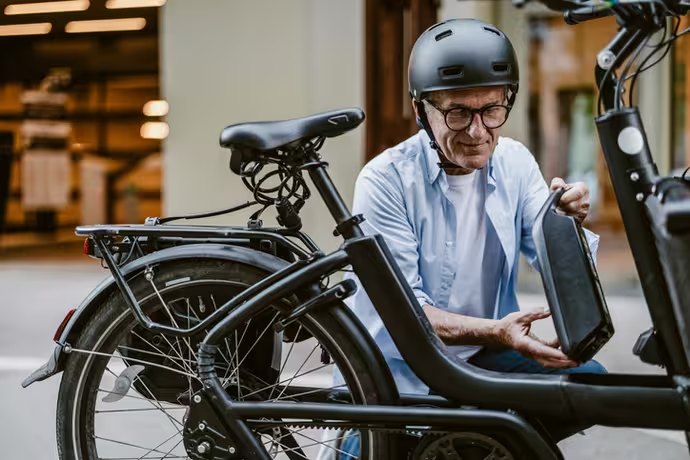
Wisper, a long-standing e-bike brand, say they have customers still riding happily on original batteries that are over ten years old.
Read more about how to care for your e-bike.
How much does it cost to charge an e-bike battery?
Surprisingly little. A full charge for a typical 400–500Wh battery uses around half a unit of electricity, which equates to about 10–15 pence. Compared to petrol, parking, or even public transport costs, it’s negligible.
Read more about living with an e-bike.
Are e-bikes safe to charge? Should I be worried about battery fires?
Headlines about e-bike fires can be alarming, but for reputable models the risk is very low. The real problems tend to come from poor-quality imports, DIY conversions, or mismatched chargers.
To stay safe: Always use the charger supplied with your bike; charge on a hard surface in a ventilated space; avoid charging overnight or in a hallway that blocks your escape route.
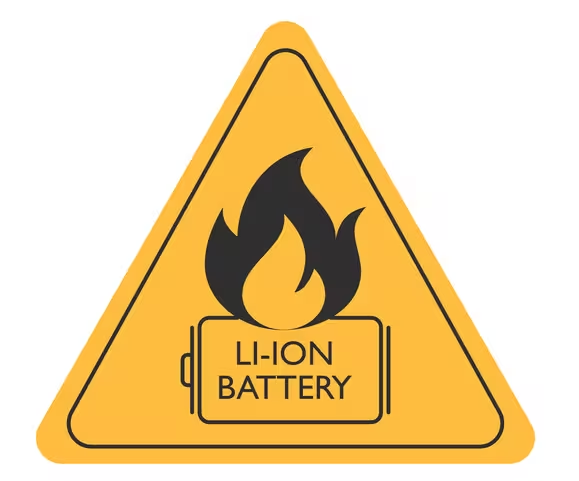
Read more about e-bike batteries and the risk of fire.
Can I store my e-bike in the rain?
E-bikes are built for everyday use, but leaving them standing in the rain for days on end may shorten their lifespan. Wipe down your e-bike after wet rides, keep the battery contacts clean, and avoid cleaning it with a pressure-washer.
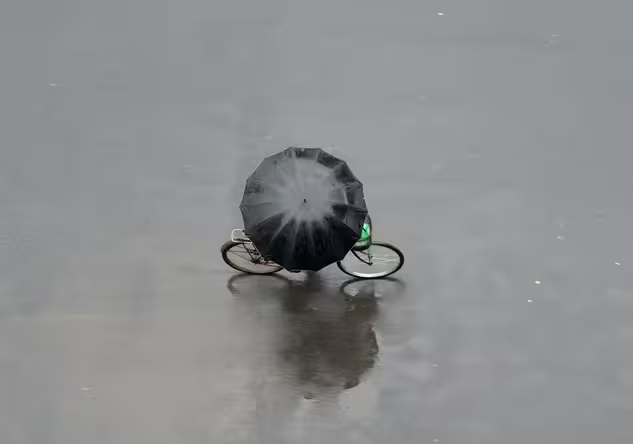
In icy weather, bring the battery inside when not riding – lithium-ion cells don’t like freezing conditions.
Read more about how to care for your e-bike.
What should I do with an old or dead battery?
Don’t throw it in the bin. Lithium-ion batteries need proper handling once they’ve reached the end of their life. Most bike shops, some manufacturers, and Halfords and Currys accept e-bike and e-scooter batteries for recycling
A growing number are also upcycled into portable power banks or home storage systems.
At present, the UK lags behind the EU, which has stricter recycling requirements and better collection infrastructure. Campaigners are pressing for similar schemes here, given the rapid growth in e-bike sales.
Read more about e-bike battery recycling and the companies who upcycle old e-bike batteries.
Can I carry a passenger on my e-bike?
In the UK, the rules are the same as for a normal bicycle: you can only carry a passenger if the bike is designed for it. A rear rack isn’t enough on its own – the e-bike needs proper seating and footrests.
That means you’ll need a cargo bike, long-tail bike, or e-bike fitted with a specific child seat or passenger kit. Many families use e-cargo bikes with built-in benches and seatbelts for carrying kids, and these are fully legal.
Read more about bicycle child seats.
Are e-bike kits legal and safe?
Conversion kits that add a motor to a regular bicycle are legal in the UK as long as the finished bike meets the EAPC rules: 250W motor; assistance limited to 15.5mph; power only when pedalling.
The risk is quality. Some cheap kits sold online don’t comply. Read more

Will I get less exercise on an e-bike?
While an e-bike reduces your effort per mile, most people end up riding further and more often. Studies show that e-bike riders get as much, and sometimes more, exercise overall compared with those on regular bikes. Assistance from the motor means hills and longer distances are no longer barriers, so you might ride every day rather than once or twice a week.
Read more about the health benefits of riding an e-bike.
Do I need insurance?
E-bike insurance is not mandatory, but many riders welcome protection from unexpected bills. Theft is the biggest risk, but accidental damage and battery replacement can also be costly.
ETA cycle insurance is well suited to e-bikes, and 24/7 Cycle Rescue will recover you and your bike if it breaks down (or its battery runs flat) mid-journey.
Can I carry shopping or heavy loads on an e-bike?
Yes, and this is where e-bikes can be transformative. With payloads of up to 200kg, they can take on jobs that once seemed the sole preserve of cars: the school run, the weekly shop, work equipment, or even small business deliveries.
In UK law, cargo e-bikes are treated exactly like other Electrically Assisted Pedal Cycles (EAPCs), and there are no restrictions on wheel count, size or weight.
Read more about how e-bikes might be the future foir family transport.
Are e-bikes suitable for older riders or people with mobility issues?
Absolutely. For many people they’re much more than transport. Adapted cycles range from e-trikes with step-through frames through to bespoke designs. Electric assist smooths out hills and extends range, while three wheels add stability and help boost confidence. The benefits are not only practical. With medical approval, adapted cycling can help ease joint strain, improve balance and support respiratory health, while also delivering the mental lift that comes from staying active.
Reputable manufacturers such as Jorvik Tricycles offer a wide range of designs, and charities like Wheels for Wellbeing help match people with the right cycle for their needs.

Read more about how adapted e-bikes are are used as mobility aids.
How much should I spend on an e-bike?
The best e-bike isn’t the most expensive one, it’s the one that suits you best.
As a rule of thumb, spending £1,500–£2,000 gets you a reliable commuter or leisure e-bike with branded components and decent after-sales support. At the budget end, bikes under £1,000 often cut corners on the motor, battery or warranty. At the premium end, £3,000+ machines may offer lighter frames, bigger batteries and integrated electronics, but they won’t necessarily get you to work any faster.
What matters most is fit and comfort. A £1,500 bike that suits your lifestyle will do more for you than a £5,000 machine gathering dust.
Read more about how to choose an e-bike, and 15 questions to ask before buying an e-bike.
Don't assume that you have to buy new. The secondhand market is thriving, but not always straightforward. Watch out for battery health as replacements cost £400–£800. Verify that the charger is the original one supplied with the bike. Check the paperwork: many reputable brands can confirm original sale and warranty history if you provide the frame number. Finally, ask for proof of purchase and cross-check the frame number on databases such as Project 529 or BikeRegister.
What are the running costs of an e-bike?
Running costs are strikingly low. Brake pads, chains and tyres wear a little faster due to the extra weight and power, but charging a 400–500Wh battery only costs 10–15p. A commuter covering 10 miles a day spends pennies on electricity. Parking is free. And in towns and cities, the e-bike is often the fastest option door to door.
The biggest single expense is replacing the battery every few years. Budget £400–£800 depending on brand and size, though with good care some batteries last far longer than the official lifespan.
Insurance is optional but worth considering. Theft is the biggest risk, especially in cities, and ETA’s cycle insurance includes new-for-old replacement, accidental damage cover, and Cycle Rescue if you’re stranded.
Do e-bikes hold their value?
Better than you might think. A well-kept e-bike from a recognised brand can hold 50–70% of its value after two years, especially if the battery is healthy and still under warranty. Cheaper or generic models tend to depreciate faster, partly because spares and support are harder to find.
As the secondhand market grows, buyers are becoming more savvy about checking frame numbers, mileage (on bikes with display logs) and battery cycles. Keeping receipts, service records and original chargers makes resale much easier.
{{cta-ebike}}
Information correct at time of publication.
Leave us a comment
