





A smart guide to buying used mobility scooters in the UK
July 22, 2025
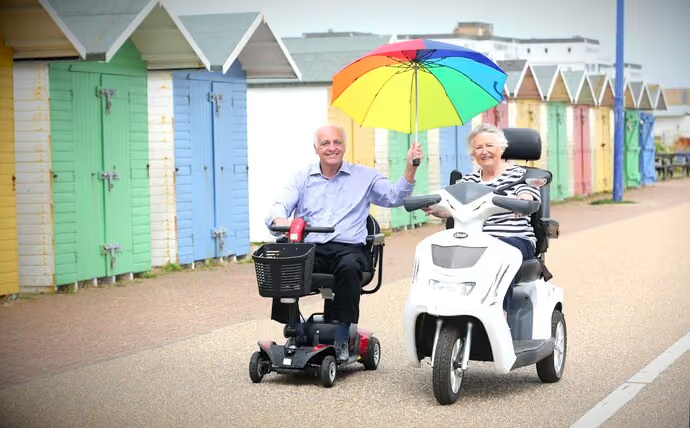
There’s freedom in owning a mobility scooter - independence, ease, a way to get around that’s practical and empowering. And if you’re looking to buy one secondhand, you’re not alone. With prices of new models often running into the thousands, pre-owned scooters can offer a welcome optin for those wanting mobility without the hefty price tag.
With an estimated 300,000 mobility scooter users in the UK, the secondhand market is thriving, but not always straightforward. While there are genuine bargains to be had, the rise of online scams and the risk of ending up with a poorly maintained model means it pays to be cautious - and a little savvy.
Five‑point checklist for buying a second‑hand mobility scooter
Start with the battery
It’s a hidden part of the scooter, but it’s arguably the most important. A weak or dying battery can leave you stranded halfway to the shops, so always ask the seller how old the battery is and whether it still holds a full charge. Don’t be afraid to factor in the cost of a replacement - for many common models, you’re looking at around £80–£180 for AGM batteries, or up to £500+ for lithium on some pricier models. Also, check that the charger works properly and is the correct one for the model.
Battery life varies widely by battery type. Entry‑level sealed lead‑acid (SLA) packs manage roughly 200–300 charge cycles, while premium SLA versions stretch to 300–400. Switch to lithium‑ion and you’re looking at 500–1,000 cycles if cared for properly, and the newer lithium‑ferro‑phosphate (LiFePO₄) technology can exceed 1,000 cycles, often lasting close to a decade before performance tails off.
Check the brakes
Mobiltiy scooters use something called electromagnetic brakes; they’re built with fewer moving parts, which means less wear and tear and more reliability. These systems also work in harmony with your speed controls, adapting braking power depending on how fast you’re going. If the scooter makes strange noises when braking, or takes longer than it should to stop, a service is overdue.
Class 2 or Class 3? Know what you’re buying
Scooters in the UK fall into two categories: Class 2 models are for pavement use and are limited to 4mph. Class 3 scooters can travel up to 8mph and are road-legal — but they must be registered with the DVLA and have working lights, indicators and a horn. For city dwellers short on space, a folding Class 2 scooter might be perfect. For those who need longer range, a Class 3 could be a better fit.
A second‑hand Class 3 scooter should already be on the DVLA’s books, so start by asking the seller for the logbook or checking the number online via the DVLA’s vehicle‑enquiry service.
If you don't receive a logbook with the Class 3 scooter you can apply for a replacement using a V62 form. Bear in mind this will cost £25.
If the scooter isn’t registered, you can do it yourself: request a V55/4 (sometimes shown as V55/MV) form, fill in your details along with the make, model and serial number, and post it to DVLA, Swansea SA99 1BE. Registration is free and, once processed, you’ll receive a V5C certificate.
{{cta-mobility}}
Check for wear and tear
Some scuffs and scrapes are to be expected, but be wary of cracks in the tyres, rust on the frame or damage to folding parts. A test drive is essential - not just to check that it runs, but to see how it handles kerbs, turning and stopping.
.avif)
(photo of our little caravan courtesy of Rex Features)
Scams to watch for
Sadly, the mobility scooter market has become a target for scammers. Watch out for fake websites and too-good-to-be-true prices on social media ads.
If you’re buying online, avoid bank transfers or cash payments. Stick with platforms that offer buyer protection, like credit cards or PayPal, and ask a friend or family member to help verify anything you’re unsure about. Remember that scams can use fake images and reviews si it’s definitely a case of buyer beware.
One of the most reliable ways to buy secondhand is through a local mobility shop. Many are family-run and trade on their reputation. Look out for refurbished scooters with warranties and clear condition ratings.
Insurance: Don’t overlook it
While not a legal requirement, having good insurance for your mobility scooter is a smart move. ETA offers mobility scooter insurance that includes accidental damage, theft, third-party liability, broken or lost key cover and even 24/7 breakdown recovery. And if you suffer a puncture, the insurance pays up to £100 to have it fixed.
ETA offers a fully-comprehensive policy with no hidden costs; one upfront price covers you on any mobility scooter, and a host of benefits are included as standard:
- Theft and Damage*
- Personal Accident up to £20,000
- Personal liability up to £2m
- Breakdown Cover for you and your mobility scooter (including home rescue)
- Replacement scooter hire up to £250
- Hospital Benefit up to £250 (no daily limit)
- New for old - however old your scooter
- Personal Effects up to £250
- Puncture cover up to £100
* You can insure your scooter for £3,500, £5,000. £7,500 or even £10,000. Mobility scooter insurance from the ETA is great value at £65 per year for a scooter or powered wheelchair worth up to £3,500. And you can buy the same policy to cover two people at the same address for a total price of only £90 per year - a 30 per cent saving.

Find out more about ETA mobility scooter insurance here or if you prefer to talk to one of our friendly advisers, call 0333 000 1234.
The ethical choice
The ETA was established in 1990 as an ethical provider of green, reliable travel services. Over 30 years on, we continue to offer cycle insurance , breakdown cover and mobility scooter insurance while putting concern for the environment at the heart of all we do.
The Good Shopping Guide judges us to be the UK's most ethical provider.
Information correct at time of publication.
Leave us a comment
