




The case for tiny cars in a 20mph world
September 30, 2025
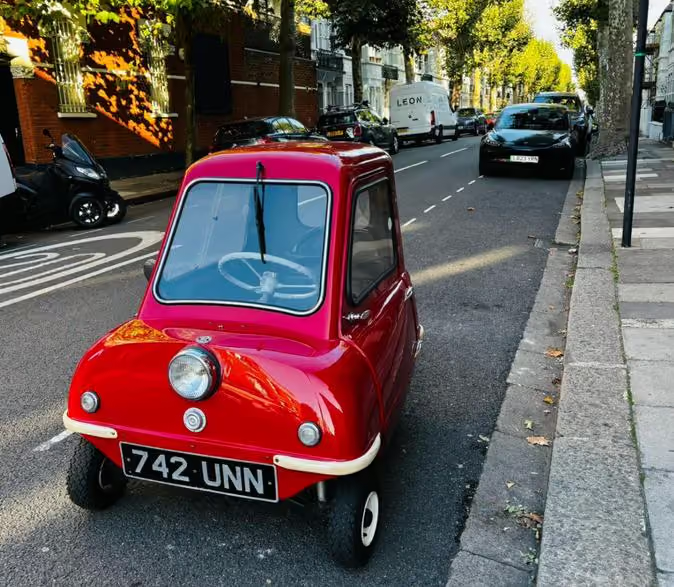
I was pedalling to work this morning when a tiny red box on three wheels pootled into view. A Peel P50 – the pocket-sized microcar known to many because Jeremy Clarkson drove one through BBC Television Centre in 2007 – buzzed along in front of me at a pace perfectly matched to the 20mph streetscape. It looked, whisper it, like the most rational car in London.
Transport for London times pedestrian crossings on an assumed walking speed of roughly 2.7mph – while the NHS defines “brisk” walking at around 3mph. In practice, plenty of Londoners stroll faster than the crossings allow for, and many older people move slower, but the point is that city trip speeds cluster around human pace.
{{cta-breakdown}}
Driving isn’t much quicker. London is now routinely ranked Europe’s slowest big city for motorists, with average speeds of roughly 11mph and drivers losing around 100 hours a year to congestion.
If the actual speed of travel in the city is closer to walking pace than motorway pace, why do we design our private vehicles as if every journey were a long-distance blast?
https://www.youtube.com/watch?v=TbmHeIYdp-0
Back people, not bulk
Across the Channel, Paris is reshaping itself for active travel. The Plan Vélo is building a continuous, city-wide bike network – more than 1,000 km of cycling facilities and counting – and the city has converted temporary “corona pistes” into permanent routes. A general 30 km/h limit (a tad under 19mph) covers most streets - a speed policy associated with substantial reductions in crashes and injuries.
Crucially, Paris is also using pricing and street design to shrink vehicles. This year it tripled parking charges for heavy SUVs visiting the city – up to €18 an hour in the centre – a nudge that reflects how much space and harm large cars impose on urban streets. The city is simultaneously scrapping tens of thousands of on-street parking bays to free space for trees, play and bike parking. The dividend is visible: safer, calmer streets and rising everyday cycling.
The little Peel P50 I spotted this morning was conceived for exactly this kind of environment. Built on the Isle of Man in the 1960s and revived in modernised form in 2010, it remains the smallest production car ever made. Early versions had no reverse gear and were so light you could pick up the rear and swivel it; today’s electric option is cleaner and tops out at the same 28mph.
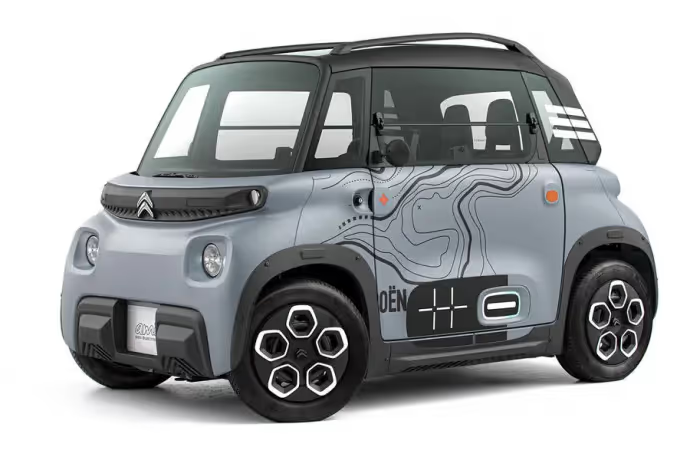
The logical heirs to the P50 are “quadricycles” – a regulatory class that caps mass and power. Here in the UK, light quadricycles are limited to about 425 kg and 28 mph; heavy quadricycles raise the limits but still sit well below conventional cars. They can’t use motorways and are designed for short, local trips. On paper, that is urban rationality.
{{cta-breakdown}}
So why aren’t they popular here? It doesn't help that this type of vehicle is not designed to share roads with fast and heavy cars; quadricycles are not subject to full passenger-car crash standards. However, they make absolute sense on traffic calmed streets away from SUVs and heavy lorries.
The market for quadricycles in the UK is as tiny as the diminutive as the vehicles themselves. The Ami is officially on sale in Britain. Renault’s Mobilize Duo – the spiritual successor to the Twizy – has been confirmed for the UK. Niche makers like Aixam and Ligier sell micro-cars through specialist dealers. The ecosystem is small, but it exists:
- Citroën Ami (electric quadricycle) – 2.41m long, about 28 mph top speed, roughly 46-mile official range, two seats. Designed for short urban hops and easy parking.
- Aixam City / e-Aixam – petrol and electric micro-cars sold through UK specialists.
- Mobilize Duo (incoming) – Renault’s Twizy replacement - now with doors.
Next to these, the P50 is a thimble. At 1.37m long, it genuinely makes the Ami look big. But the family resemblance is clear: all prioritise low speed, small size and simple, short trips.
So, what is the most rational car for a 20 mph city?
Perhaps the rational answer is fewer cars, full stop – more walking, cycling and public transport, and when you really need private transport, a smaller, lighter, slower one that matches the street. That aligns with what Paris is already proving: tame speeds and invest in active travel, and you get safer roads, cleaner air and a lot less stress.
In that world, a humble quadricycle – or even a 1960s micro-car – starts to look like the most sane car on the roads.

Cycle Rescue is free with ETA bicycle insurance
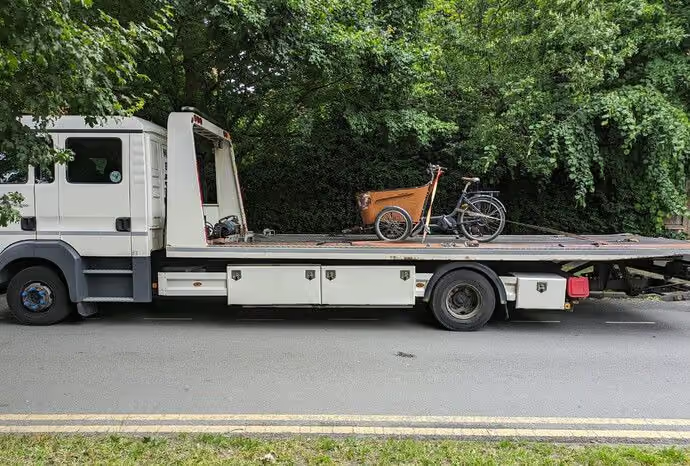
If you suffer a breakdown (including punctures, or even a flat e-bike battery) while out cycling, our 24-hour Cycle Rescue team is on hand to arrange transport for you and your bicycle to a safe location. The service is included for free with ETA cycle insurance, along with:
• Theft, accidental damage & vandalism
• E-bike battery theft cover
• Cycle Rescue
• No devaluation of your bike over time
• £2m third party PLUS £20,000 personal accident cover
• Shed and garage storage
• Low standard excess of 5% (£50 minimum)
{{cta-cycling}}
The original. And still the best.
The ETA has provided specialist cycle insurance for over 30 years – longer than anyone else in the UK. Over the decades, we have earned a reputation for our friendly customer service and environmental ethics.
Information correct at time of publication.
Leave us a comment
