





How breakdown cover works for cars, e-bikes, bicycles, motorbikes and mobility scooters
December 18, 2025
Breakdown cover is something most drivers are familiar with. Fewer people realise that recovery services also exist for bicycles and mobility scooters.
That matters if you’re someone who relies on a bike or scooter day to day. If you don’t know these services exist, you can’t use them – and you may assume that a breakdown means arranging your own way home.
ETA provides breakdown cover for cars, vans and motorbikes, alongside specialist services for cyclists and mobility scooter users. This guide explains what’s available, and how recovery works in practice if you use one of these vehicles.
Car, van and EV breakdown cover
For cars and vans, breakdown cover mostly does what people expect. A recovery technician attends, attempts a roadside fix, and if that doesn’t work the vehicle is taken to a garage or back home.
Electric vehicles haven’t changed that model as much as many drivers assume. Most EVs can be winched or driven onto recovery vehicles in the same way as petrol or diesel cars. Where they differ is in the checks that come first. High-voltage battery systems require additional care, particularly if there’s any sign of overheating, and recovery teams need the training and equipment to deal with that safely.
https://youtu.be/TpBVk8wuNvc?si=azbS1QakQJ5t3vz0
ETA supports petrol, diesel, hybrid and electric vehicles by working with trained local recovery operators and garages, including EV specialists, so those checks are carried out before a vehicle is moved.
{{cta-breakdown}}
Cycle breakdown cover – why it often isn’t really recovery
Bicycle breakdown cover does exist, but it’s usually only offered by specialist cycle insurers – and even then, it often doesn’t work like breakdown cover at all.
Most policies operate on a pay-and-claim basis. If your bike becomes unusable, you’re expected to organise your own way home – often by calling a taxi – pay for it yourself, and then claim the cost back later.
That model assumes the cyclist can always self-recover. In reality, that’s where it often falls apart.
Many policies exclude punctures altogether. Finding a taxi willing to take a bike is hit and miss. With a cargo bike, trike or adapted cycle, it can be unrealistic. Even when transport can be arranged, reimbursement is usually capped and conditional. The stress, the upfront cost and the admin all sit with the rider.
How Cycle Rescue works
Cycle Rescue was created to avoid that problem.
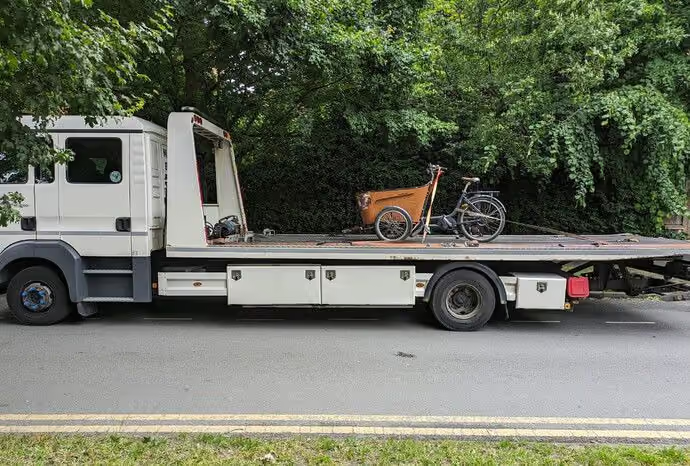
Rather than reimbursing cyclists after the event, ETA provides direct recovery. If your cargo bike, bicycle, trike, or e-bike breaks down – whether through mechanical failure, a puncture or a flat battery – you call a dedicated number.
A vehicle is sent to collect both you and your bike and take you somewhere safe: home, a repairer or a station.
There’s no need to find a taxi, no payment up front, and no receipts to submit. The recovery works in the same way motorists expect breakdown cover to work.
Whatever type of cycle you ride, that distinction matters. After all, having to arrange your own transport isn’t really breakdown cover at all – it’s reimbursement after the fact.
Cycle Rescue costs £24 a year as a standalone product and is included free with ETA cycle insurance.
Motorbike breakdown cover
Motorbike breakdown cover can vary widely, and not always in obvious ways. Most policies will get you and the bike off the road, but onward travel – getting you to your intended destination – is often optional or capped. Pillion cover can also depend on the level of cover selected.
ETA motorbike breakdown cover includes roadside assistance, with up to an hour’s labour to try to get the bike moving again. If that isn’t possible, the bike, rider and pillion are recovered to a suitable garage. Cover includes common causes of breakdown such as lost or broken keys, running out of fuel and misfuelling.
For riders heading abroad, ETA also offers single-trip European motorbike breakdown cover for trips of between one and 31 days.
Mobility scooter breakdown cover
For mobility scooter users, a breakdown isn’t an inconvenience. It can mean being stranded.
When a mobility scooter breaks down, the problem is immediate and practical. The person using it may have no safe or realistic way of getting home on their own.
Walking may not be possible. Public transport can be inaccessible, and waiting at the roadside can quickly become distressing.
<div style="padding:56.25% 0 0 0;position:relative;"><iframe src="https://player.vimeo.com/video/136612272?badge=0&autopause=0&player_id=0&app_id=58479" frameborder="0" allow="autoplay; fullscreen; picture-in-picture; clipboard-write; encrypted-media; web-share" referrerpolicy="strict-origin-when-cross-origin" style="position:absolute;top:0;left:0;width:100%;height:100%;" title="ETA Mobility Scooter Breakdown Cover"></iframe></div><script src="https://player.vimeo.com/api/player.js"></script>
Mobility scooter breakdown cover is designed to deal with that situation directly. ETA arranges assistance to recover both the user and the scooter, taking them home or to a place of repair, rather than leaving the user to solve the problem themselves.
The emphasis is on resolving the breakdown safely and promptly, recognising that for many users a scooter is not optional transport but essential.
ETA mobility scooter breakdown cover includes powered wheelchairs as standard. Recovery applies whether the user relies on a mobility scooter or a powered chair, without needing to select an add-on or higher level of cover.
{{cta-mobility}}
Why ETA works differently
ETA has been providing breakdown cover for over 35 years. Instead of running a centralised fleet, it works with carefully selected local mechanics and recovery operators, sending the nearest suitable specialist when help is needed.
That approach avoids treating every breakdown as if it looks the same. It means electric cars, motorbikes, cargo bikes and mobility scooters are handled by people who understand the vehicle – and the person relying on it.
Breakdown cover only works when it reflects how people actually travel. That principle runs through ETA’s services, whether you’re driving, cycling, riding a motorbike or using a mobility scooter.
Breakdown cover FAQs
Are electric vehicles recovered differently from petrol or diesel cars?
Usually not. Most EVs can be winched or driven onto recovery vehicles in the same way as conventional cars. The main difference is that recovery teams carry out additional safety checks on high-voltage battery systems before towing, particularly if there is any sign of overheating.
Is bicycle breakdown cover widely available?
Only from specialist cycle insurers. Even then, it often doesn’t work in the same way as car breakdown cover. Many policies rely on reimbursement rather than arranging recovery directly. “Pay-and-claim” bicycle breakdown means the cyclist must organise their own transport after a breakdown – typically by calling a taxi or van – pay for it upfront, and then submit a claim for reimbursement later. By contrast, ETA offers Cycle Rescue – a true 24/7 breakdown recovery service for cyclists. There’s no upfront payment and no claims process afterwards.
Why can pay-and-claim cover be a problem for cyclists?
It assumes the rider can always self-recover. That can be unrealistic with e-bikes, cargo bikes, trikes or adapted cycles, especially if a taxi won’t take the bike or the rider can’t move it safely. Claims are often capped or conditional.
Does motorbike breakdown cover include onward travel?
Not always. Most policies will recover the bike and rider from the roadside, but onward travel – getting you to your intended destination – is often optional, capped or only included at higher levels of cover. Pillion cover can also depend on the policy.
What happens if a mobility scooter breaks down?
Mobility scooter breakdown cover is designed to deal with the immediate problem of getting the user home safely. ETA arranges recovery for both the user and the scooter, rather than leaving the person to organise transport themselves.
Why doesn’t ETA operate its own recovery fleet?
ETA works with carefully selected local mechanics and recovery operators instead. This allows the nearest suitable specialist to be sent, whether the breakdown involves a car, motorbike, bicycle or mobility scooter.
Does car breakdown cover work if I crash?
If your car or motorbike is involved in a crash, your motor insurer will usually want to be contacted before the vehicle is recovered. That’s because insurers often want to control where the vehicle goes, usually to an approved repairer or assessment centre.This can be confusing at the roadside. A breakdown provider may attend, but then advise you to pause and speak to your insurer before anything is moved. It’s not foot-dragging – it’s about avoiding duplicated recovery and problems later with a claim. For cars and motorbikes, the rule of thumb is simple: after a collision, speak to your motor insurer first, even if you also have breakdown cover.
{{cta-breakdown}}
Information correct at time of publication.
Leave us a comment
