




Cycling on ice: staying upright when temperatures drop
January 6, 2026
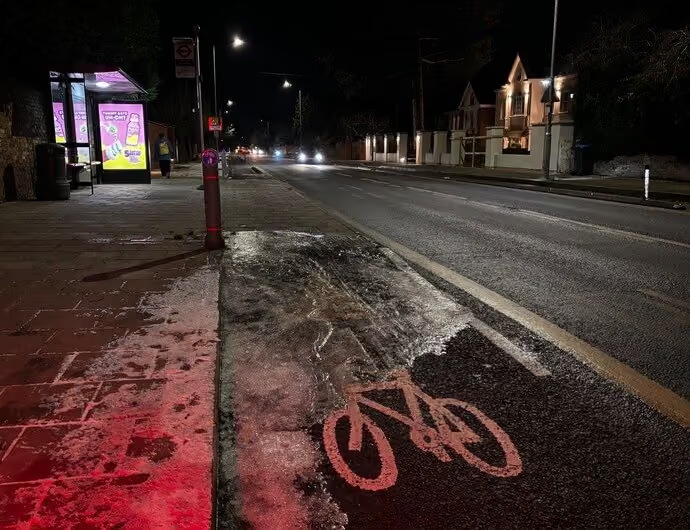
If you’re still riding through this cold snap, you’re clearly not short on grit. Whether your local cycle lane is might be another matter.
When temperatures plunge, gritting lorries are out in force to treat roads. If a cycle lane happens to fall within range of the spreader, it’s simply luck.
Councils often cite cost. There is no statutory requirement to grit the cycle network, even though over 560,000 people in England and Wales commute by bike, according to the 2021 Census. The result is a predictable one: people who want to keep riding are forced onto untreated cycle lanes or back into traffic.
Inspired by frustration – and pub chat after work one day – we once built a pedal-powered gritter. It was all very Heath Robinson. The hopper was tiny, the steering wobbly, and its speed glacial.
{{cta-cycling}}
https://www.youtube.com/watch?v=q4iduw52d-c&feature=youtu.be
Our gritter bike was never meant to be a real-world solution. It's a reminder that winter upkeep of cycle lanes is a political choice, not a technical impossibility. After all, in countries where cycling is treated as everyday transport, paths are cleared and gritted as a matter of course.
Despite the UK’s hit-and-miss approach to cycle lane upkeep, many people keep riding. You don’t need mountains of specialist kit – just a different approach to your riding.
Leave the gimmicks to Bond
Every winter seems to bring a crop of inventions promising to “solve” cycling in snow. Some are ingenious. Most are unnecessary.
Metal-studded tyres work, which is why they are popular in Nordic countries with long, hard winters. In Britain, where freezing conditions are usually short-lived and variable, a decent tread is usually enough.
More elaborate solutions tend to be curiosities that impress more in photographs than on the road. Two-wheel-drive bicycles, such as those developed by the Japanese manufacturer Tretta, take power to the front wheel via a long chain from the rear hub. All-wheel-drive looks good on paper but adds weight and complexity.
.avif)
Caterpillar-track bikes fall into the same category. They look unstoppable. However, when we used one to build a James Bond-inspired bicycle (together with ejector seat and flamethrower), it turned out to be no better than a standard MTB.
The lesson is that a conventional bike, ridden with a bit of care, copes remarkably well.
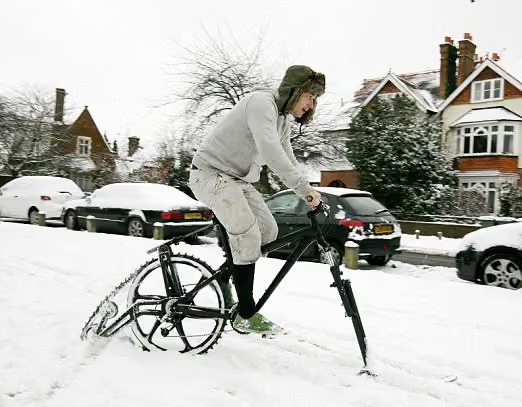
How to ride when it’s icy
It might be obvious, but keep yourself warm. Cold riders tense up. Warm riders relax, react better and make fewer mistakes. We’re big fans of neoprene overshoes. They won’t keep your feet entirely dry or warm, but they can be slipped over any type of shoe and work well enough to justify the investment.
In terms of riding style, the cardinal rule is slow down. Shifting your riding position back a bit reduces the chance of the front wheel sliding out. It also puts more weight over the rear tyre – the one doing the driving – which helps with traction.
Speaking of which, the rear brake can be your early warning system. A gentle squeeze will tell you how slippery things really are. Use the front brake only when you’re travelling in a straight line.
Finally, read the road ahead even more keenly than usual. Here in the UK, conditions can change quickly, and not only because the gritting of cycle lanes is so patchy. Even if you are commuting in winter on a familiar route, it’s easy to be caught out by sheets of ice in areas of shade, or where there’s water run-off.
By contrast, fresh snow can be surprisingly predictable to ride on. Slush not so much. Ice dusted with a thin layer of powder is worse still. Watch for changes in texture and colour, especially where there are footprints or tyre tracks.
Cold weather riding: as old as cycling itself
Mountain biking is usually traced back to 1970s California, but cyclists have been riding in extreme winter conditions for far longer. During the Klondike gold rush at the turn of the 20th century, “wheelmen” followed dogsled tracks across the Alaskan wilderness. Bicycles were cheaper than teams of dogs, though they came with their own problems: frozen bearings, cracked tyres and relentless cold.
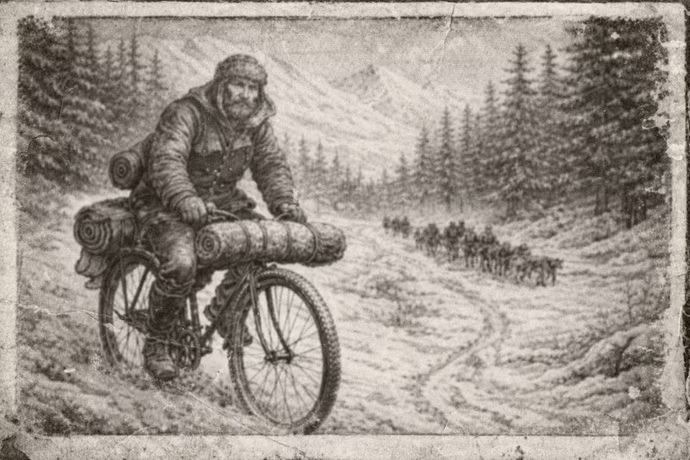
Strip away the fur and the weight, and the approach feels familiar: a base layer, mid-layer, insulation and shell – but all made from thick wool and heavy cotton. Today’s riders benefit from thin merino base layers, lightweight fleeces, and a breathable softshell, all of which weigh very little and allow sweat to escape.
One less thing to worry about
A minor mechanical problem becomes a much bigger one when you’re standing by the roadside in sub-zero temperatures.
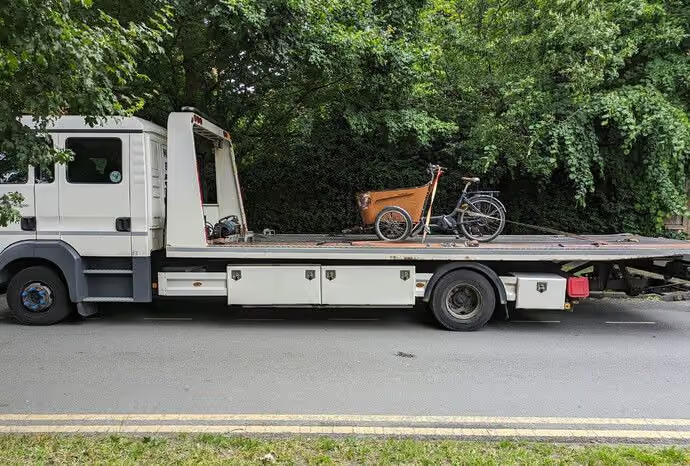
That’s why, over 30 years ago, the ETA launched Cycle Rescue – the UK’s first breakdown cover designed for bicycles of all kinds.
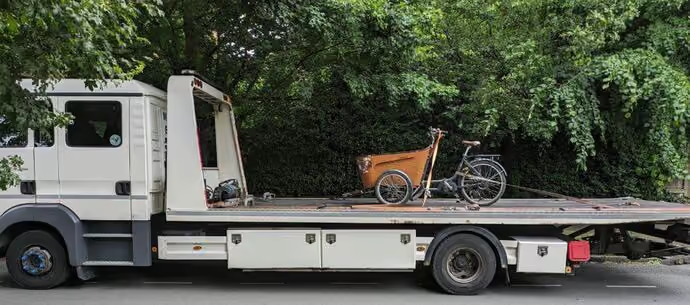
Winter riding isn’t about bravado. With a few changes to how you ride, and a realistic view of what British winters actually throw at us, cycling remains one of the most reliable ways to get around, even when temperatures plummet.
{{cta-cycling}}
Information correct at time of publication.
Leave us a comment
