



A guide to e-bike throttles
May 8, 2026
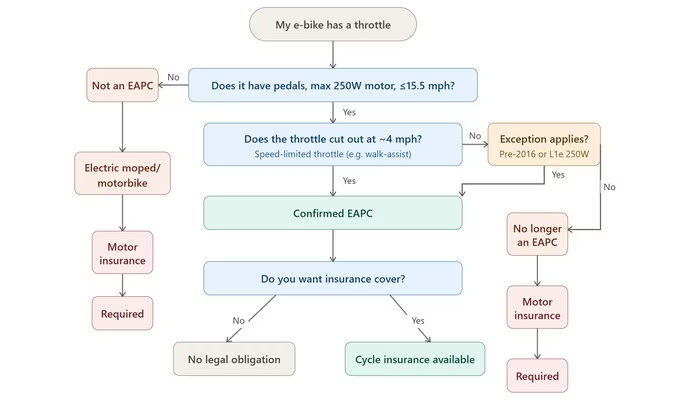
If your e-bike has a throttle you can use the diagram below to work out whether or not it is eligible for cycle insurance.
e-bike throttle FAQs
What is a throttle on an e-bike? A throttle is a twist grip or thumb lever that activates the motor without the rider needing to pedal. It works like the throttle on a motorbike.
Are throttles legal on e-bikes in the UK? Throttles are not outright banned in the UK, but their use is subject to specific legal conditions. To remain within the EAPC (Electrically Assisted Pedal Cycle) classification, a throttle must cut out at approximately 4mph. Above that speed, the motor must only operate while the rider is actively pedalling. The exceptions are detailed below.
What is the 4 mph / walk-assist rule? A throttle on a standard EAPC may propel the bike without pedalling up to roughly 4mph. This is commonly called "walk-assist" and is designed to help riders wheel a heavy bike. Once that speed is reached, the throttle must cut out and motor assistance can only resume through pedal assist.
Can a throttle ever legally operate above 4 mph without pedalling? Yes, in two specific circumstances:
- Pre-2016 bikes: If your e-bike was made before 1 January 2016 with a throttle, it retains its EAPC classification even if the throttle operates above 4 mph, provided it meets the other EAPC requirements of working pedals and a motor no bigger than 250W that cuts out at 15.5 mph.
- Type-approved or SVA-certified L1e 250W bikes: An e-bike with a 250W motor that has been certified as L1e may have a throttle that operates up to 15.5 mph and still retains its EAPC status.
What is the difference between type approval and SVA? Type approval is a certification process carried out by a manufacturer or importer, covering an entire model range. Single Vehicle Approval (SVA) is the equivalent process available to individuals who want to certify a specific bike. An e-bike that is certified as L1e 250W retains its EAPC status.
If my e-bike has L1e 250W certification, is it still an EAPC? Yes. An e-bike type-approved or SVA-certified as L1e with a 250W motor retains its EAPC classification. This means it can be ridden anywhere a conventional pedal cycle is permitted without the need for registration, taxation, insurance, or a licence.
What happens if my throttle operates above 4 mph and my bike has no certification? Unless your bike was made before 2016, it falls outside the EAPC classification and is considered an electric moped or electric motorcycle depending on its power and maximum speed. This means it must be registered, taxed, and insured, and you must hold the appropriate licence. Riding a non-compliant bike on public roads without these in place can result in prosecution, fines, points on your licence, and seizure of the bike.
Do I need insurance for an EAPC with a walk-assist throttle? No, insurance is not a legal requirement for EAPCs. Because they are treated like conventional bicycles in law, there is no obligation to hold motor insurance. However, cycle insurance can cover theft, accidental damage, personal accident, third-party liability, and even breakdown recovery, so it is well worth considering.
Do I need insurance if my throttle e-bike is classified as a moped? Yes. Once a bike falls outside EAPC rules, motor insurance becomes a legal requirement. Third-party motor insurance is the minimum required before the vehicle can be ridden on public roads.
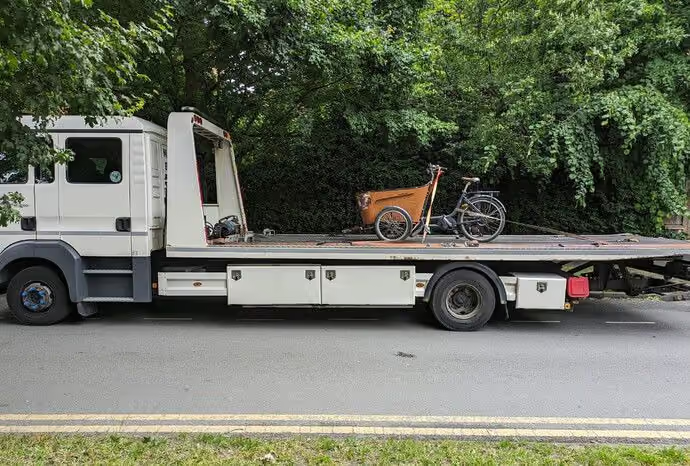
Can the police seize my e-bike if the throttle is non-compliant? Yes. If a bike does not meet EAPC requirements and is being ridden without the registration, insurance, and licence that a moped requires, the police have the power to seize it. Riders can also face prosecution for multiple offences, including riding without insurance and without a licence.
I bought a second-hand e-bike with a throttle — how do I know if it's legal? There are a few things to check. First, establish when the bike was manufactured or first sold — if it was sold before 1 January 2016 with a throttle, it retains its EAPC status under the old rules. For bikes made after that date, check whether the bike carries a type approval number, which should have been applied by the manufacturer or importer. If you believe the bike may have gone through SVA, ask the seller for the certification documentation. If there is no certification and the throttle operates above 4 mph, the bike may not be road-legal as an EAPC.
Could the rules on throttles change in the future? There was a government consultation in early 2024 proposing significant relaxations, including allowing full-throttle assistance up to 15.5 mph without type approval or SVA. However, the Department for Transport chose not to take those proposals forward in January 2025. Current rules therefore remain unchanged: a 250W motor limit, assist cutting out at 15.5 mph, and throttles restricted to walk-assist speeds unless the bike holds L1e certification.
Where can I ride an EAPC? Anywhere a conventional pedal cycle is permitted — roads and cycle paths. You cannot ride on pavements. Because L1e 250W certified bikes retain their EAPC status, this applies to them too, regardless of whether their throttle operates up to 15.5 mph.
Glossary of terms
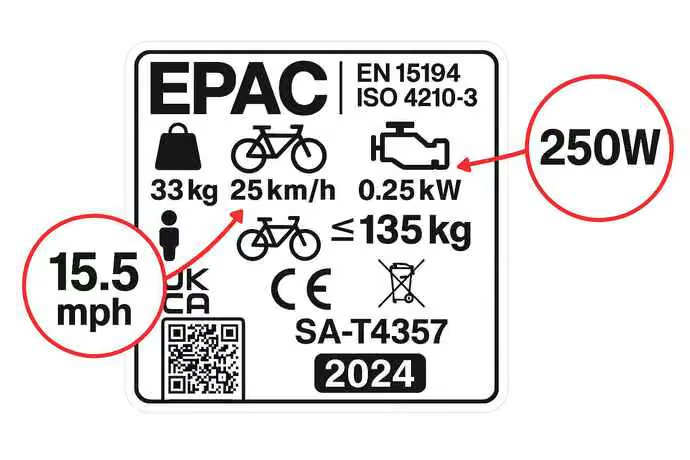
EAPC (Electric Assisted Pedal Cycle) The legal classification for an e-bike in the UK and EU. To qualify as an EAPC, a bicycle must have pedals capable of propelling it, a motor no bigger than 250W, and motor assistance that cuts out when the rider reaches 15.5mph (25km/h). EAPCs are treated like conventional bicycles in law, which is why they do not require registration, a licence, or insurance.
Throttle A control on an e-bike (typically a twist grip or thumb lever) that activates the motor without the rider needing to pedal. On an EAPC, a throttle is only permitted if it cuts out at approximately 4 mph. Above that speed, motor power must be delivered through pedal assist only.
Pedal assist (EAPC mode) The standard mode of motor assistance on an EAPC, where the motor only operates while the rider is actively pedalling. The motor cuts out automatically once the bike reaches 15.5mph (25km/h).
Walk-assist / 4mph throttle May be used to propel the bike up to approximately 4mph without pedalling, which is useful for wheeling the bike. The motor must cut out at or around this speed for the bike to retain its EAPC classification.
Pre-2016 A pre-2016 e-bike may have a throttle that operates above 4mph and still retain its EAPC classification, provided it meets the other EAPC requirements (pedals, max 250W motor, ≤15.5 mph assist).
L1e 250W E-bikes type-approved as L1e with a 250W motor are permitted under UK regulations to have a throttle that operates up to 15.5mph while retaining their EAPC status.
Electric moped A motorised two-wheeled vehicle with a motor output typically up to 4kW and a maximum speed of 28mph (45km/h). An e-bike that does not meet EAPC requirements, for example, because its throttle operates above 4mph without a qualifying exception, is categorised as an electric moped or electric motorcycle depending on its motor size and/or speed. It must be registered, taxed, and insured, and the rider must hold the appropriate licence.
Electric motorbike E-bikes that fail to meet EAPC requirements may be classified as electric motorcycles depending on their power output and speed capability. Like electric mopeds, they require registration, taxation, motor insurance, and an appropriate licence.
Motor insurance Third-party insurance is required by for electric mopeds and electric motorcycles. It is a legal requirement to have motor insurance before riding such a vehicle on public roads.
Cycle insurance Because EAPCs are legally the same as conventional bicycles, there is no legal requirement to insure them. However, cycle insurance policies can provide cover for theft, accidental damage, personal accident, third-party liability, and even breakdown recovery.
Information correct at time of publication.
Leave us a comment
